







How to Increase Sales on Myntra in 2026: Complete Seller Guide to Profitable Promotions, Campaigns, Sale Calendar & Growth Framework
Selling on Myntra should be simple list products, set prices, join sales, get orders.
Reality tells a different story.
Despite Myntra hosting over 50 million monthly active users and India’s fashion e-commerce crossing ₹80,000 crore, most sellers struggle with a frustrating paradox: traffic exists, but sales don’t follow.
The complaints echo across seller communities:
“We’re visible but conversions are terrible.”
“Competitors with similar products get 5× our orders.”
“Every sale feels like burning money on discounts.”
The general perception is straightforward lower prices + deeper discounts + more ads = more sales. This logic sounds right. It’s also dangerously incomplete.
Myntra isn’t a passive marketplace where customers simply find the cheapest option and buy. It’s an algorithm-driven ecosystem where visibility, catalog quality, timing, and strategic execution determine which products get seen, considered, and purchased. Two sellers can offer identical products at identical prices one thrives while the other struggles with single-digit daily orders.
The difference isn’t luck. It’s avoiding specific, identifiable mistakes that most sellers unknowingly make.
This guide will walk through:
- The Complete Myntra Sale Calendar for 2026. Understanding what’s coming and how to prioritize
- 8 Costly Mistakes that drain profits during Myntra promotions
- Proven Strategies employed by successful sellers to maximize returns Actionable Frameworks that can be implemented immediately
- Whether the goal is preparing for the next End of Reason Sale, Big Fashion Days, or any seasonal promotion, this guide serves as a comprehensive playbook for increasing sales on Myntra.
Understanding the Myntra Ecosystem: Key Platform Dynamics
Before diving into mistakes and strategies, understanding how Myntra’s ecosystem operates is essential.
How Myntra’s Algorithm Evaluates Sellers
| Factor | What It Means |
| Catalog Health | Product listing quality (images, titles, descriptions, attributes) directly impacts search rankings and recommendation visibility |
| Commercial Competitiveness | Discount depth, coupon participation, and pricing relative to competition influence algorithmic placement |
| Operational Excellence | SLA adherence, cancellation rates, return rates, and delivery speed affect seller score and campaign eligibility |
| Sales Velocity | Consistent order flow improves organic rankings more than sporadic spikes |
Critical Thresholds That Impact Performance
| Threshold | Number | Why It Matters |
| Ad Spend History | ₹50,000+ over 90 days | Myntra’s keyword targeting algorithm requires data to optimize. Below this threshold, ad efficiency is significantly lower |
| Monthly Order Volume | 200-500 orders | Crossing this unlocks SJIT (Seller Just-in-Time) eligibility faster delivery badges, improved search visibility, premium campaign placement |
| Pre-Sale Window | 10-15 days before major sales | This is when significant campaign revenue is decided. Customers load carts during this period; brands that capture this attention win before the sale begins |
The Visibility-Discount Equation
Flawed belief: “Better discount = More sales”
Reality: “Visibility × Competitive discount = Sales”
During major sales, thousands of products compete for attention. A product with moderate discount but high visibility will consistently outsell a product with deep discount but low visibility.
Myntra Sale Calendar 2026: Complete Event Schedule
Strategic planning requires understanding the full promotional calendar. Below is the comprehensive Myntra sale schedule for 2026.
Q1 2026 – New Year, Republic Day and Early-Season Events
| Event | Expected Dates | Priority Level | Key Categories |
|---|---|---|---|
| Myntra New Year Sale | January 1–5 | Medium | Accessories, Casual Wear, Beauty |
| Myntra Republic Day Sale | January 20–25 | High | Winter Wear, Ethnic Fusion, Footwear |
| Myntra Valentine’s Week Sale | January 30 – Feb 08 | Medium-High | Couple Wear, Accessories, Fragrances, Lingerie |
| Myntra Birthday Blast | February 26 – March 15 | Very High | Fashion (Men & Women), Footwear, Beauty, Accessories, Sportswear |
| Myntra Women’s Day Sale | March 6–8 | Medium | Women’s Western, Ethnic, Beauty |
| Myntra Holi Sale | March 12–15 | Medium | Ethnic Wear, Casual Wear, Kids |
Q2 2026 – Summer, Big Fashion Days and Wedding Season
| Event | Expected Dates | Priority Level | Key Categories |
| End of Reason Sale (EORS) | May 28 – June 14 | Critical | All Categories :- Biggest sale of the year |
| June BAU | June 15–19, 22, 29–30 | Medium | Post-EORS stock liquidation, Monsoon-ready apparel, Basics |
| WoW Weekend | June 20–21 | Medium | Fast-fashion drops, Travel gear, Premium cosmetics |
| Season Finale | June 23–28 | Critical | End-of-season heavy discounts, Clearance sales for Summer Stock |
Q3 2026 – Monsoon, Raksha Bandhan and Independence Day
| Event | Expected Dates | Priority Level | Key Categories |
| Myntra Monsoon Sale | July 18-25 | Medium | Rain Wear, Footwear, Casual Wear |
| Myntra Raksha Bandhan Sale | August 5-9 | Medium-High | Ethnic Wear, Accessories, Gift Sets |
| Myntra Independence Day Sale | August 12-16 | High | All Categories |
| Myntra Big Fashion Days | September 12-16 | High | All Categories |
Q4 2026 – Festive Season, Pink Friday and Year-End EORS
| Event | Expected Dates | Priority Level | Key Categories |
| Myntra Navratri & Dussehra Sale | September 28 – October 5 | High | Ethnic Wear, Chaniya Choli, Jewelry |
| Myntra Diwali Sale | October 15-25 | Critical | Ethnic Wear, Jewelry, Home, Gifting |
| Myntra Black Friday | November 20-24 | High | All Categories |
| Myntra End of Reason Sale (EORS) | December 4-12 | Critical | All Categories |
How to Prioritise Myntra Events by Tier
| Tier | Events | Resource Commitment |
| Tier 1: Full Commitment | EORS (June & December), Diwali Sale, Big Fashion Days | Maximum inventory, ad spend, team bandwidth |
| Tier 2: Strategic Participation | Republic Day, Independence Day, Pink Friday, Wedding Season | Focused SKU participation; selective investment |
| Tier 3: Tactical/Testing | Valentine’s, Holi, Monsoon, Women’s Day | Category-specific; clearance focus; testing ground |
8 Myntra Promotion and Campaign Mistakes That Hurt Sales and Profit
Here’s the comprehensive breakdown of mistakes that separate profitable sellers from those who struggle and the fixes that work.
1. Joining Every Myntra Sale Without a Clear Plan

The Problem:
Many sellers assume that participating in more campaigns automatically leads to more sales. They register for every Myntra event Republic Day, Valentine’s, Holi, Summer Sale, EORS, Diwali, Pink Friday spreading resources across 15+ promotions annually.
What Actually Happens:
- Capital gets fragmented: Inventory committed to minor events isn’t available for flagship sales where traffic and conversion are highest
- Discount fatigue sets in: Customers learn to wait indefinitely for the next promotion, destroying full price sell through
- Teams burn out: Campaign preparation demands significant bandwidth; constant events exhaust operational capacity
- Performance becomes inconsistent: Uneven results across events can hurt seller score, affecting visibility in priority events
The Fix:
Create a Campaign Portfolio Strategy:
Not every sale deserves equal attention. Classify events into tiers and allocate resources accordingly:
| Tier | Approach | Inventory Focus |
| Tier 1 | Full participation with maximum effort | Hero SKUs + Volume drivers + Clearance |
| Tier 2 | Selective participation | Hero SKUs only |
| Tier 3 | Clearance and testing only | Dead stock + New product tests |
Reserve hero products for Tier 1 events: The top 10-15% of products driving majority of revenue should only be heavily promoted during EORS and major Big Fashion Days events.
Use Tier 3 events as test labs: Before committing heavily to EORS, use smaller sales to test discount elasticity, creative formats, and build ad spend history.
2: Weak Inventory Planning for Myntra Sale Events
The Problem:
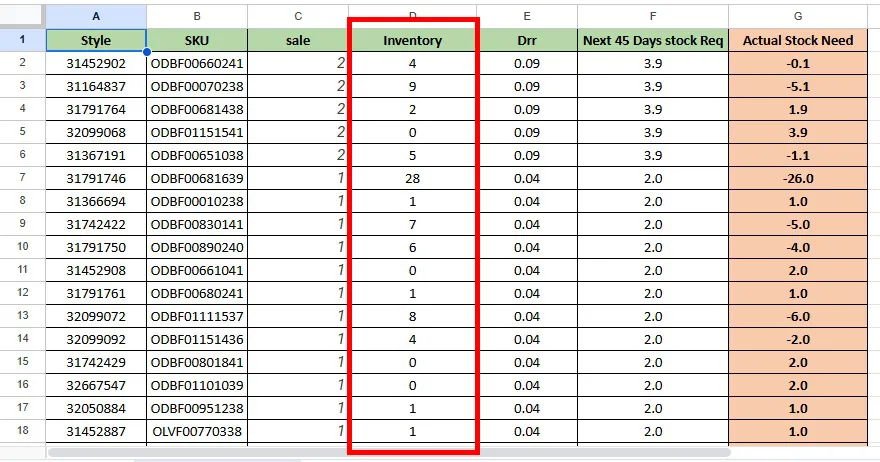
Inventory planning mistakes cause maximum financial damage on Myntra. The pattern is predictable:
Understocking Scenario:
- Hero SKUs stock out early in the sale
- Remaining days of high traffic yield minimal revenue
- Stockouts damage product rankings for weeks afterward (algorithm penalizes unavailability)
Overstocking Scenario:
- Demand overestimated based on optimistic projections
- Capital remains frozen in slow-moving inventory for months
- Heavy markdowns required later, destroying margins
The Fix:
Implement category-specific demand forecasting:
Different categories behave differently during various sales:
| Category | EORS Behavior | Diwali Behavior |
| Ethnic Wear | 3-4× normal | 6-8× normal |
| Western Casualwear | 5-6× normal | 2-3× normal |
| Footwear | 4-5× normal | 3-4× normal |
| Accessories | 3-4× normal | 5-6× normal |
Create tiered inventory strategy:
| Product Tier | Definition | Stock Strategy |
| Hero SKUs | Top 10-15% driving 60-70% of revenue | 2.5-3× normal inventory |
| Volume Drivers | Consistent mid-tier performers | 2× normal inventory |
| Clearance | Slow-movers, previous season | Clear at minimal margins |
Phase inventory release:
Don’t make all stock available at sale launch. Release in tranches across the sale duration to maintain “In Stock” status throughout:
- Days 1-2: 40% of hero inventory
- Days 3-4: 35% of hero inventory
- Days 5+: Remaining 25% plus buffer
Build toward SJIT eligibility:
Sellers achieving 200 to 500 monthly orders become eligible for SJIT (Seller Just in Time) program, unlocking faster delivery badges, improved search visibility, and better campaign placement.
3: Unprofitable Discount and Pricing Strategy on Myntra
The Problem:
The pressure to match competitor discounts leads many sellers to slash prices across their entire catalog including flagship products.
Short-term: Order spike
Long-term consequences:
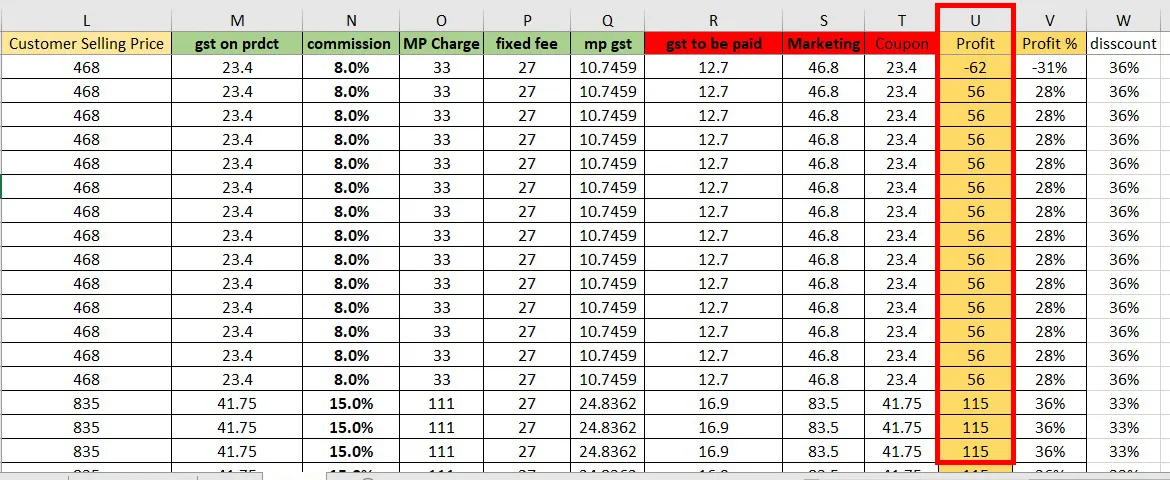
- Margin destruction: Deep discounts on high-value products often yield revenue below breakeven after platform fees and logistics costs
- Brand perception damage: Customers begin associating the brand with perpetual discounting; full-price sell-through collapses
- Irreversible price anchoring: Once customers purchase at 70-80% off, they psychologically anchor to that price point and refuse to pay more
The Fix:
Implement strategic discount architecture:
| Product Category | Discount on MRP | Coupon Layer | Margin Target |
| Hero/Flagship Products | 30-40% off | None or 5% | 18-22% |
| Volume Drivers | 50-60% off | 10% of selling price | 12-15% |
| Clearance/Previous Season | 70-80% off | 10-15% of selling price | 0-5% (breakeven acceptable) |
| Dead Stock | 80-90% off | Maximum available | Negative acceptable |
Understand the MRP-Selling Price-Coupon stack:
Myntra’s visibility algorithms reward coupon participation. Optimal structure:
- MRP: Set high enough to enable 70-80% discount on clearance without going below cost
- Selling Price: Post-discount listed price
- Coupon: Minimum 10% of selling price to trigger Myntra’s “Coupon Available” visibility badges
Example Calculation:
| Component | Hero SKU | Clearance SKU |
| Product Cost | ₹400 | ₹400 |
| MRP | ₹1,999 | ₹1,999 |
| Selling Price | ₹1,199 (40% off) | ₹499 (75% off) |
| Coupon | ₹120 (10%) | ₹75 (15%) |
| Customer Pays | ₹1,079 | ₹424 |
| Bank Settlement Amount | ~₹850 | ~₹335 |
| Margin | ₹450 (healthy) | -₹65 (acceptable loss) |
Use BOGO strategy to protect hero pricing:
Instead of discounting a flagship ₹1,500 shirt to ₹600:
Offer: “Buy this shirt at ₹1,100 + get matching trousers at ₹399 (worth ₹999)”
Benefits:
- Hero product value perception protected
- Average order value increases
- Shipping cost per unit decreases
- Brand saves on logistics while moving more inventory
4: Ignoring Myntra Ads and Visibility Levers
The Problem:
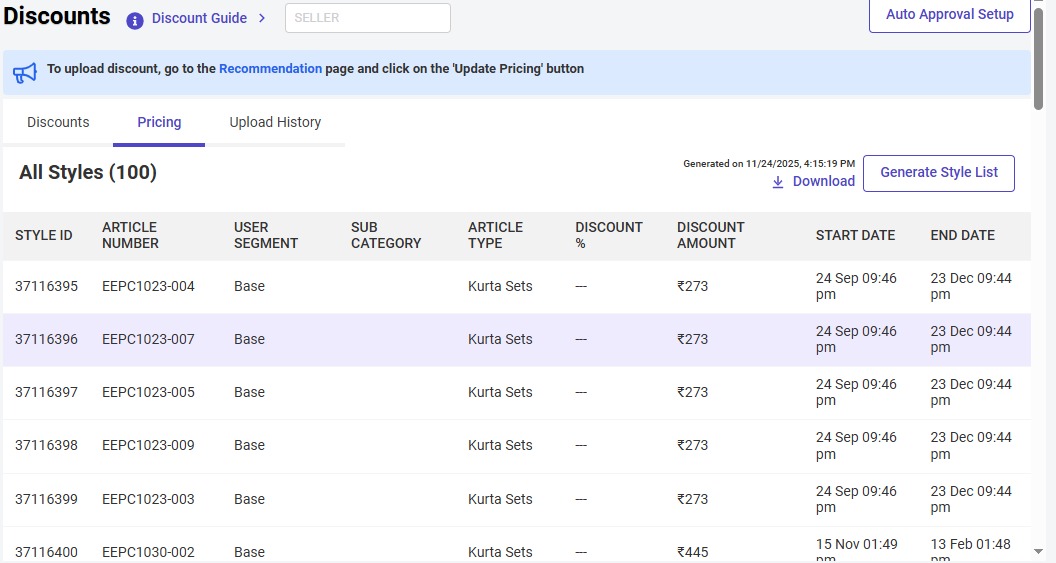
During major sales, thousands of products compete for attention. The customer journey flows through:
- Featured placements: Banner slots, “Trending Now,” personalized recommendations
- Category browsing: Sorted by relevance and popularity, not just price
- Search results: Influenced by ad bids and catalog health
- Add to cart and purchase
At every stage, visibility precedes consideration. A product with moderate discount and high visibility will outsell a product with deep discount and low visibility.
The Fix:
Build ad history before major events:
Myntra’s ad platform leverages machine learning that improves with data. Keyword targeting delivers significantly better results when ad spend crosses ₹50,000 in the preceding 90 days.
Don’t wait for major sales to start advertising. Build ad history 2-3 months in advance so the algorithm is optimized when it matters most.
Master the Add to Cart pre sale strategy:
This is one of the most powerful tactics that successful sellers employ.
How it works:
Starting 10-15 days before major sales, customers begin browsing, comparing, and adding products to their carts in anticipation.
Winning approach:
- Increase ad spend during pre-sale window when customers are in “research mode”
- Ensure products appear in search results and recommendations to land in carts before sale begins
- Win before the sale starts customers with pre-loaded carts convert within hours of sale launch
Why this works:
The conversion battle is largely decided in the pre-sale window. Customers who have already added a product to their cart are unlikely to remove it once the sale begins—they’ve mentally committed to the purchase.
Allocate visibility budget strategically:
| Phase | Budget Allocation | Focus |
| Pre-Sale (D-15 to D-1) | 40% of campaign budget | Cart loading; brand visibility |
| Sale Days 1-2 | 35% of campaign budget | Conversion; hero SKU push |
| Remaining Sale Days | 25% of campaign budget | Retargeting; clearance push |
5: Low‑Quality Myntra Product Listings That Don’t Convert
The Problem:
Product listings are the storefront on Myntra. Low-quality visuals, generic titles, and incomplete attributes create friction at the most critical moment. when customers are deciding whether to click, consider, and convert.
Common catalog issues:
- Low-resolution images against cluttered backgrounds
- Generic titles: “Women Kurta Blue”
- Missing attributes (fabric, occasion, pattern)
- Incomplete or inaccurate size charts
Result: High ad spend, low conversion rates, wasted investment.
Myntra’s algorithm increasingly weights catalog health scores, a composite of image quality, title optimization, attribute completeness, and description quality.
The Fix:
Image optimization standards:
| Image Type | Best Practice |
| Primary Image | Pure white background; full product visibility; minimum 1080×1440px |
| Secondary Images (4-6) | Lifestyle shots; multiple angles; fabric close-ups; size reference |
| Campaign-Specific | Refresh for major events with seasonal themes |
Title optimization formula:
Before: “Women Kurta Blue”
After: “Women’s Embroidered Cotton A-Line Kurta | Navy Blue | Festive & Casual Wear | [Brand Name]”
Structure:
text
[Gender] + [Product Type] + [Key Feature/Fabric] + [Style] + [Color] + [Occasion] + [Brand]
Complete all catalog attributes:
Products with 100% attribute completion rank higher and appear in more filtered searches:
- Fabric/Material
- Pattern
- Occasion
- Sleeve Type
- Neckline/Collar
- Fit Type
- Length
- Wash Care
Conduct pre-sale catalog audits:
Review and optimize listings 30 days before every Tier 1 event flag poor images, optimize titles, complete missing attributes.
6: Running Myntra Campaigns Without Real‑Time Optimisation
The Problem:
Many sellers configure campaign settings inventory, discounts, ads before the sale begins, then step away assuming nothing can be adjusted mid-event.
Consequences:
- Underperforming SKUs continue consuming ad budget while high-converters are under-resourced
- Missed optimization windows first 24 to 48 hours generate data that could optimize remaining days
- Inventory imbalances some SKUs stock out while others lag
The Fix:
Treat major campaigns as live operations:
Assign dedicated team members to monitor performance in real time during sale events.
Implement optimization protocol:
| Timeframe | Action |
| Hours 1 to 6 | Monitor initial velocity; identify early winners and losers |
| Hours 6 to 24 | First optimization: Pause underperforming ads; increase budget on high-converters |
| Hours 24 to 48 | Analyze cart vs. conversion data; adjust pricing on high abandonment SKUs |
| Days 3 to 5 | Push clearance inventory with additional coupon incentives |
| Final Days | Last-chance messaging; clear remaining promoted inventory |
Leverage Add-to-Cart data:
Myntra provides Add-to-Cart analytics (typically with 15-20 day lag). Use this data to inform strategy:
| Performance Pattern | Strategy |
| Top Selling SKUs | Increase ad budget by 2×; consider slight margin reduction (20% → 15-17%) to accelerate volume |
| Low Selling SKUs | Push for break-even sales; clear at zero margin to free capital |
| High Cart, Low Conversion | Indicates pricing friction—add flash coupon or bundle offer |
The idea behind margin compression on top sellers: Focus on increasing number of orders rather than maximizing margin per order. Volume creates momentum, improves rankings, and builds long-term visibility.
7: Skipping Post‑Sale Follow‑Up With Myntra Customers
The Problem:
The sale ends. Orders are fulfilled. Teams exhale.
Then… nothing.
Most brands fail to recognize that campaign buyers represent a concentrated cohort of high-intent customers who can drive:
- Repeat purchases at full price or higher margins
- Brand advocacy and referrals
- Long-term customer lifetime value
Cost of ignoring post-sale engagement:
- Constantly paying to acquire new customers each sale
- One-time buyers never return
- Missed opportunity to recover margins through non-discounted purchases
The Fix:
Segment campaign buyers within 72 hours:
| Segment | Criteria | Strategy |
| High-Value New Customers | First purchase; AOV above average | Premium nurture; exclusive early access to new arrivals |
| Repeat Buyers | Purchased before; returned for sale | Loyalty program enrollment; VIP treatment |
| Single-Item Buyers | Low AOV; single category | Cross-sell campaigns; “Complete your look” offers |
Execute 30-day post-sale nurture sequence:
| Timing | Communication | Objective |
| Day 3-5 | Delivery confirmation + “Complete Your Look” suggestions | Immediate cross-sell |
| Day 10-14 | “Thank You” message + exclusive loyalty coupon (15% off next purchase) | Drive repeat visit |
| Day 21-25 | New arrivals showcase (non-sale items) | Full-price consideration |
| Day 28-30 | “We Miss You” reminder + time-limited offer | Urgency-driven conversion |
Implement BOGO cross-sell strategy:
Example: Customer purchases formal shirt during sale.
Day 5 Communication: “Your shirt is on its way! Complete your look add matching trousers at 25% off (exclusive for sale buyers).”
Benefits:
- Customer already in positive brand relationship
- Minimal incremental shipping cost
- Higher order value; lower effective acquisition cost
8: Overlooking Myntra Campaign Rules and Compliance
The Problem:
Myntra campaigns come with detailed requirements:
- Registration deadlines
- Inventory commitment thresholds
- Discount configuration specifications
- SLA performance standards
- Creative asset guidelines
Sellers treating these as formalities face consequences:
- Campaign disqualification: Missed requirements can remove products from visibility placements
- Platform penalties: SLA violations trigger seller score deductions affecting future visibility
- Configuration errors: Incorrect discount or coupon setup prevents products from surfacing in promotional pages
The Fix:
Assign campaign compliance ownership:
Designate a team member responsible for reading, understanding, and ensuring adherence to all campaign documentation.
Build a compliance timeline:
| Days Before Event | Action |
| D-30 | Review campaign announcement; note all requirements |
| D-21 | Confirm inventory commitment internally |
| D-14 | Submit inventory commitment to Myntra |
| D-10 | Configure discounts and coupons accurately |
| D-7 | Submit creative assets (if required) |
| D-3 | Verify all configurations live correctly on platform |
| D-1 | Final compliance audit; confirm team readiness |
Maintain SLA readiness:
Myntra penalizes sellers who fail SLA during high-volume events:
- Cancellation Rate: Keep below 1%
- Late Dispatch Rate: Keep below 2%
Pre-sale actions: Confirm logistics partner capacity, pre-pack bestselling SKUs, staff adequately for dispatch surge.
Advanced Strategies for Increasing Sales on Myntra
Beyond avoiding mistakes, here are proactive strategies that drive consistent growth.
Strategy #1: How to Clear Dead Stock Profitably
The Insight:
Every brand accumulates dead stock inventory that hasn’t moved in 3-6+ months, blocking capital and warehouse space.
Most sellers hold onto this inventory hoping for eventual recovery. This approach almost always backfires.
The Strategy:
- Identify dead stock: Products with zero or minimal sales in 90+ days
- Calculate opportunity cost: Frozen capital could fund hero SKU inventory or advertising
- Price for movement: Offer at 80-90% discount on MRP even 10-20% below cost if necessary
- Position strategically: Create dedicated “Last Chance” or “Clearance” collection during major sales
- Reinvest recovered capital: Deploy freed-up funds toward top-selling SKUs where ROI is proven
The Logic:
It’s acceptable even smart to sell dead stock at 10-20% loss from base cost. The idea is to free blocked capital and reinvest in products that are actually selling. The loss on clearance gets recovered through margins on top performers.
Strategy #2: The Add to Cart Pre Sale Campaign
The Insight:
A significant portion of sale revenue comes from carts loaded in the 10-15 days before the event begins.
The Execution:
| Phase | Timing | Action |
| Awareness | D-15 to D-10 | Increase brand search bids; refresh hero images with “Coming Soon” messaging |
| Consideration | D-10 to D-5 | Push specific product ads; target customers who viewed but didn’t purchase in previous 30 days |
| Cart Loading | D-5 to D-1 | Maximum ad allocation; retarget all visitors; “Add to cart—sale starts soon” messaging |
| Conversion | Sale launch | Maintain visibility on carted products; shift budget to non-carted high-potential SKUs |
Why this works:
Customers who’ve added products to cart before the sale are committed. They convert within hours of sale launch often before competitors’ products gain traction.
Strategy #3: The Pre Sale Add to Cart Strategy
The Insight:
SJIT (Seller Just in Time) eligibility requiring 200-500 monthly orders unlocks significant visibility advantages:
- Faster delivery badges (boosting conversion rates)
- Improved search visibility
- Better campaign placement access
The Approach:
For sellers below this threshold, create a focused plan to cross it:
- Identify high velocity SKUs: Products with consistent conversion, not just traffic
- Concentrate ad spend: Focus budget on proven performers rather than spreading thin
- Accept lower margins temporarily: Prioritize volume over margin until threshold is crossed
- Maintain consistency: Steady order flow matters more than occasional spikes
Strategy #4: How to Get SJIT Eligibility Faster
The Insight:
During high traffic campaigns, slightly compressing margins on top selling SKUs can dramatically accelerate order volume improving search rankings, seller score, and long term visibility.
The Approach:
For products already performing well during a sale:
- Reduce margin by 3 to 5 percentage points: If standard margin is 20%, drop to 15 to 17% mid-sale
- Increase ad budget simultaneously: 2× on high-converting SKUs
- Capture volume for post sale positioning: Higher order volumes during campaigns improve algorithmic positioning for weeks afterward
When to use this:
- Products with high repeat purchase potential
- Products competing for category bestseller status
- Products close to crossing volume thresholds
Myntra Campaign Readiness Checklist
30–7 Days Before the Sale Strategy, Inventory and Catalog Prep
Strategy & Planning
- Classify event tier and allocate resources accordingly
- Identify hero SKUs for focused investment
- Set campaign P&L targets (revenue, margin, ad spend limits)
- Confirm SJIT eligibility status
Inventory & Pricing
- Finalize inventory commitment based on demand forecast
- Reserve buffer stock for hero SKUs (2.5 to 3× normal)
- Plan phased inventory release schedule
- Configure discount architecture by product tier
- Set up coupon structures (minimum 10% of selling price)
- Prepare BOGO offers where applicable
Catalog & Creative
- Audit and refresh product images
- Optimize titles with relevant keywords
- Complete all catalog attributes
- Prepare campaign specific creatives if needed
Advertising & Visibility
- Confirm ad spend history status (target ₹50K+ in last 90 days)
- Set up PLAs and banner placements
- Plan pre-sale vs. live-sale budget allocation
- Prepare Add to Cart campaign strategy
Compliance & Operations
- Complete all registration requirements
- Verify T&C adherence
- Confirm logistics partner capacity
- Staff for dispatch surge
During the Campaign: Live Monitoring and Optimization
- Assign real time monitoring owner
- Track hourly performance for key SKUs
- Monitor inventory levels and release buffer as needed
- Pause underperforming ads after 24 hours
- Increase budget on high converting SKUs
- Adjust pricing/coupons based on velocity
1–30 Days After the Sale – Analysis, Retargeting and LTV
- Compile campaign performance report
- Identify top and underperforming SKUs with root causes
- Segment campaign buyers within 72 hours
- Execute 30 day post sale nurture sequence
- Retarget high value buyers with loyalty offers
- Document learnings for next campaign
Key Takeaways: Myntra Sales Growth Blueprint for Founders
Strategic Planning Tier Events and Win the Pre-Sale Window
- Not all Myntra sales deserve equal attention. Classify events into tiers and allocate resources accordingly.
- The pre-sale Add-to-Cart window is critical. Significant revenue is decided 10-15 days before the sale begins. Invest in visibility during this period.
- Build toward key thresholds: ₹50K ad spend over 90 days unlocks algorithm optimization; 200-500 monthly orders unlocks SJIT benefits.
Execution – Discount Architecture, Catalog Health and Live Control
- Discount architecture matters more than discount depth. Protect hero SKUs with moderate discounts; use deep discounts strategically for clearance.
- Live campaigns require live management. The “set and forget” approach guarantees suboptimal results.
- Catalog health is conversion infrastructure. No amount of advertising compensates for poor product listings.
Financial Strategy – Manage Margins, Coupons and Dead Stock
- Dead stock is frozen capital. Liberate it even at a loss and reinvest in products that actually sell.
- Coupon participation drives visibility. Minimum 10% of selling price as coupon triggers Myntra’s visibility badges.
- Post-sale monetization determines true ROI. Campaign success should be measured in customer lifetime value, not just event revenue.
Operations – Compliance, SLA Performance and Campaign Governance
- Compliance is non-negotiable. Missed deadlines and configuration errors can disqualify products from visibility entirely.
- SLA performance impacts future campaigns. Maintain operational excellence during high-volume periods.
- BOGO strategies benefit everyone. Customers get value, brands save on shipping, and average order value increases.
Moving From Insight to Implementation
Understanding these mistakes and strategies is the first step. Implementation is what creates results.
For sellers preparing for upcoming Myntra events:
- Start with a campaign audit: Which of these 8 mistakes have affected past performance?
- Prioritize fixes: Address the highest-impact issues first typically inventory planning, discount architecture, and visibility investment.
- Build systems: Create checklists, assign ownership, and establish processes that prevent mistakes from recurring.
- Measure and iterate: Every campaign generates data. Use it to refine strategy for the next event.
The brands that consistently win on Myntra aren’t necessarily those with the deepest discounts or biggest budgets. They’re the ones who treat campaigns as strategic operations planned, executed, optimized, and learned from.
Every sale is an opportunity. Every mistake is a lesson. Every improvement compounds over time.
Need Expert Support for Your Myntra Strategy?
Global Websters helps fashion and lifestyle brands unlock profitable growth on Myntra, Amazon, Flipkart, and other marketplaces.
From catalog optimization to campaign strategy to performance marketing, the team brings deep expertise and proven frameworks to every engagement.